
When it comes to pricing, most people believe that this involves a purely rational and logical approach to making decisions. Analysing costs & data, calculating margins, assessing competitor’s pricing, and so on.
But the reality is that there are likely to be many emotional factors affecting your decision making that you might not be aware of. The concept of “emotional intelligence” gives us a useful model that helps us better understand and manage our emotions in any situation.
In this article, I want to share with you why I think emotional intelligence (EQ) is often more important than rational intelligence (IQ) in pricing, and why you probably have a low EQ score when it comes to making pricing decisions.
What is “Emotional Intelligence”?
It’s a concept invented by Daniel Goleman (1995) and describes your ability to recognize, understand, manage, and use emotions effectively in oneself and others.
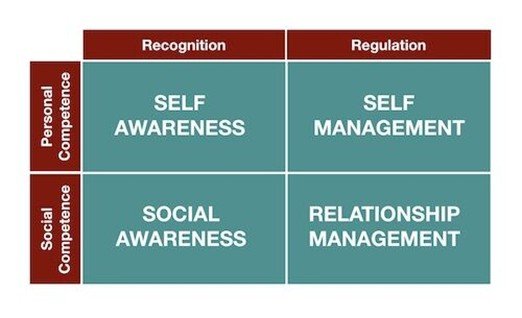
- Self Awareness – the ability to recognise and understand your own emotions and how they affect your thoughts and behaviours.
- Self Management – the ability to manage your emotions effectively, especially in stressful situations.
- Social Awareness – the ability to understand and empathise with the feelings that other people are experiencing.
- Relationship Management – the ability to create and maintain positive relationships and resolve conflicts effectively.
When it comes to making pricing decisions, I think business leaders are hugely swayed by emotional factors without realising it, leading them to make poor decisions when it comes to pricing.
What can go wrong?
We see these patterns of behaviour happen all the time. Here are some examples of when your emotional intelligence is over-ruling your rational intelligence.
- Allowing one bad customer reaction to a price change to overly influence your thinking about what most of your customers might be willing to accept.
- Allowing your sales teams to overly influence any price changes, because they are nervous about how they will handle the messaging.
- Allowing group think around a boardroom table to quickly decide that making any proactive pricing changes is “too risky” (without doing any analysis).
- Being scared to address price changes because you are afraid of how your customers might react, and you don’t want to rock the boat.
How often have you seen this happen in business? All of these things can have a detrimental impact on your pricing decisions, and this will have a significant negative impact on your profitability.
The EQ Framework in a Pricing Context
Here’s a framework that might help you understand what’s going on internally with your emotions when making pricing decisions for both you, your teams and your customers. It shows an example of good and bad practice for each aspect of the model.
- Self Awareness – Helps you understand internal barriers and external pressures influencing your pricing decisions.
- Good – understanding that fear is a strong driver of behaviour and reactions when it comes to pricing, both for you and your team (especially Sales). Recognise that it is normal and understandable but also know that taking pricing decisions is the right thing to do for your business and can’t be avoided. The only question is how you do it and what’s the most effective way to do it.
- Bad – allowing internal beliefs, group think and pushback from your team (or key customers) to influence your decision and deciding any action is too risky.
- Self Management – Enables you to handle challenging pricing discussions calmly and confidently.
- Good – being fully prepared for difficult conversations with customers allows to you manage your own emotional state more adeptly, rather than allowing fear-based emotions to drive your reaction. Good preparation is the key.
- Bad – caving in to the slightest pressure or threats from customers in a desperate attempt not to lose business. This displays a lack of confidence, projects weakness and assumes you have no bargaining power in the relationship.
- Social Awareness – Strengthens customer relationships through empathy and genuine understanding.
- Good – making sure the customer feels listened to, and showing you understand the problem from their point of view. Use empathy to demonstrate you care about their situation and offer options on how it can be resolved.
- Bad – using a blanket approach to communicating price changes, ignoring all responses and objections, not handling responses queries well, and only giving a short notice period.
- Relationship Management – Supports effective communication and conflict resolution, crucial for successful pricing adjustments.
- Good – building good relationships with customers, handling conflict effectively when issues arise, being flexible but positively stating your plans and requirements with confidence.
- Bad – dismissing your team’s concerns, and saying “it could be worse, just get on with it”. Making judgemental or using negative language. Being poorly prepared and not setting yourself up to succeed.
Good EQ practice for pricing decisions
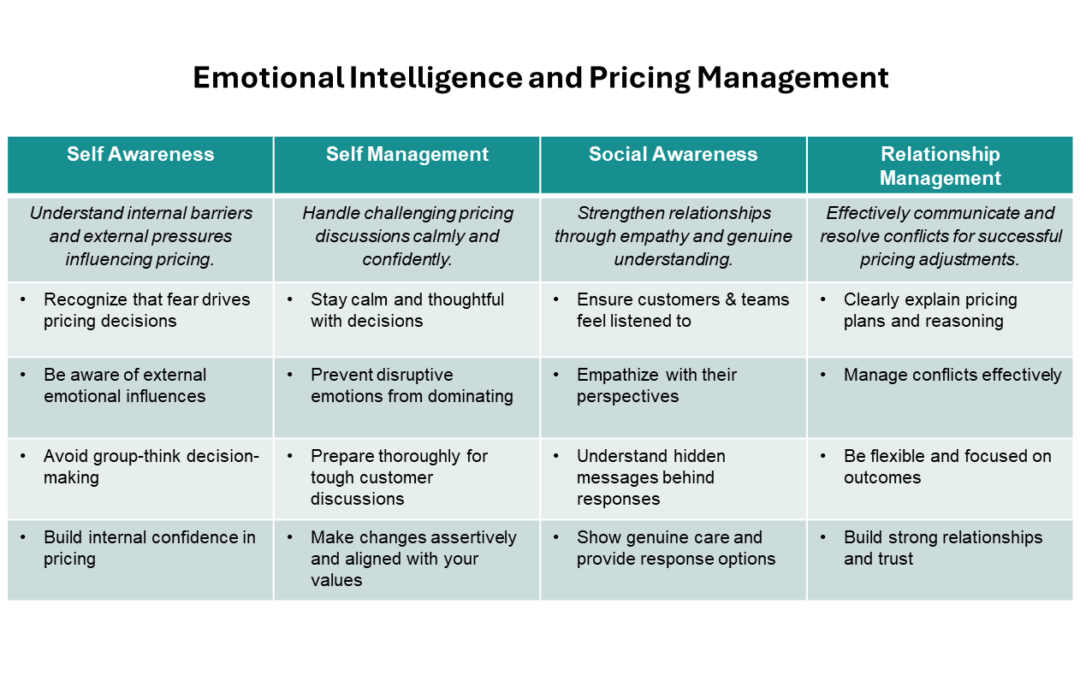
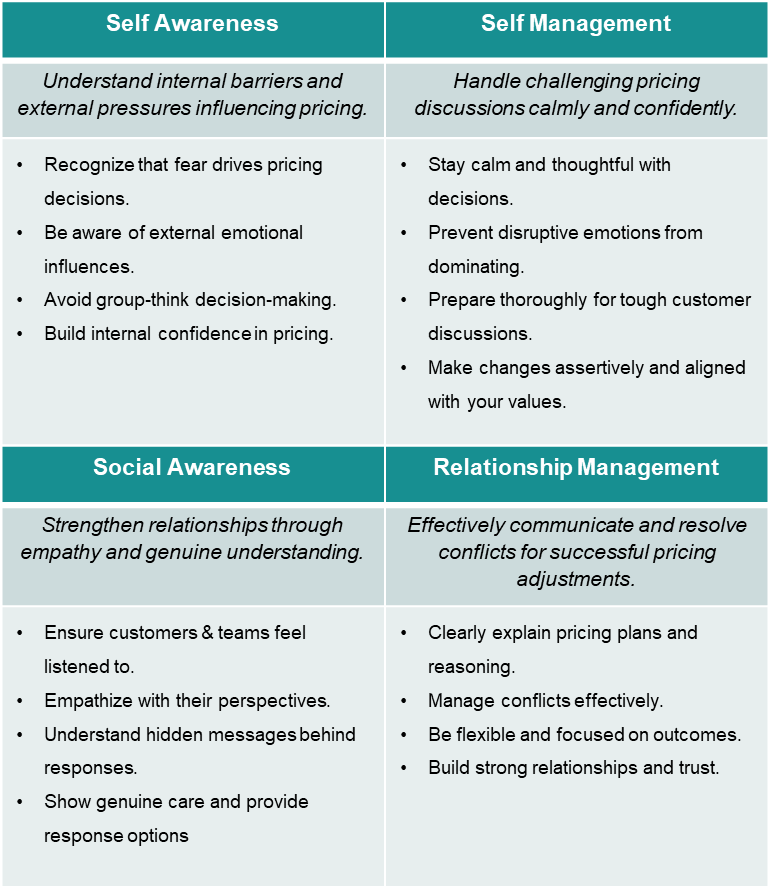
Here’s a summary of the key things to remember about your EQ when thinking about pricing and how it might affect you and your business in each of the four sections of the model.
Conclusion
Most business people think they’re pretty smart when it comes to making pricing decisions. This could be based on years of experience or thinking you know what is needed to make pricing decisions.
But you would be surprised how often I see business leaders reacting and responding in a way that is allowing their emotional instincts to override any sensible rational approach.
In other words, no matter how smart you think you are (IQ), your EQ is probably letting you down when it comes to pricing.
Many studies show the clear link between better pricing and higher profits. McKinsey state that for every 1% increase in price, you can increase net profits by 8-10%.
Improving your emotional intelligence directly contributes to making better pricing decisions, enhancing both profitability and customer relationships.
Next Steps
If you need any help with getting clarity on your pricing situation, and working out a better strategy for profitable growth, do get in touch.