
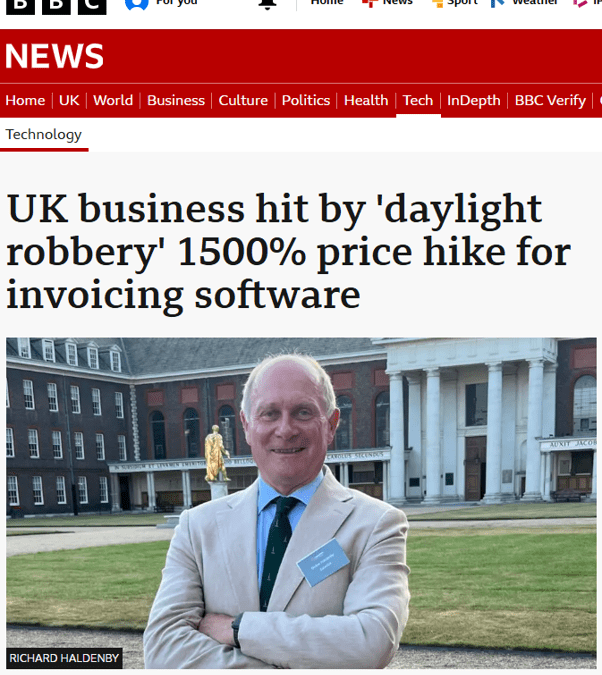
𝐈 𝐰𝐚𝐬 𝐪𝐮𝐨𝐭𝐞𝐝 𝐛𝐲 𝐭𝐡𝐞 𝐁𝐁𝐂 𝐭𝐡𝐢𝐬 𝐰𝐞𝐞𝐤 𝐢𝐧 𝐚 𝐫𝐞𝐩𝐨𝐫𝐭 𝐚𝐛𝐨𝐮𝐭 𝐚 𝐒𝐚𝐚𝐒 𝐜𝐨𝐦𝐩𝐚𝐧𝐲 𝐢𝐧𝐜𝐫𝐞𝐚𝐬𝐢𝐧𝐠 𝐬𝐨𝐦𝐞 𝐜𝐮𝐬𝐭𝐨𝐦𝐞𝐫𝐬’ 𝐩𝐫𝐢𝐜𝐞𝐬 𝐛𝐲 𝐮𝐩 𝐭𝐨 1,500%.
Harvest, a time tracking and invoicing platform used mostly by small businesses and agencies, recently changed its pricing from a simple “per seat” model to a “per seat + usage” model.
The article reported one customer whose monthly bill had risen from $130 to $2,110.
He was told he was being defaulted to the Enterprise plan with Unlimited usage billing, and that the $2,110 was based on his usage up to that point. In the same email, he was offered a downgrade to “Flex” billing at an estimated $997.50, still nearly eight times what he had been paying.
Now, there is nothing inherently wrong with moving from “per seat” to “per seat + usage” pricing.
Many SaaS businesses are rethinking how they monetise, partly to cover rising AI costs and partly to capture a fairer share of the value their software creates for the customer. Done well, usage pricing aligns what you pay with what you get. That is a good thing.
𝐓𝐡𝐞 𝐩𝐫𝐨𝐛𝐥𝐞𝐦 𝐡𝐞𝐫𝐞 𝐰𝐚𝐬 𝐧𝐨𝐭 𝐭𝐡𝐞 𝐦𝐨𝐝𝐞𝐥. 𝐈𝐭 𝐰𝐚𝐬 𝐭𝐡𝐞 𝐞𝐱𝐞𝐜𝐮𝐭𝐢𝐨𝐧, 𝐚𝐧𝐝 𝐚 𝐧𝐞𝐚𝐫 𝐭𝐨𝐭𝐚𝐥 𝐥𝐚𝐜𝐤 𝐨𝐟 𝐭𝐫𝐚𝐧𝐬𝐩𝐚𝐫𝐞𝐧𝐜𝐲.
The old Harvest rates were $11/month for Pro and $14/month for Premium, with no other charges.
The new pricing page shows very similar headline prices of $9 for Teams and $14 for Enterprise.
The difference is shown in a small footnote: “𝘢𝘥𝘥𝘪𝘵𝘪𝘰𝘯𝘢𝘭 𝘪𝘯𝘷𝘰𝘪𝘤𝘦𝘴, 𝘱𝘳𝘰𝘫𝘦𝘤𝘵𝘴, 𝘤𝘭𝘪𝘦𝘯𝘵𝘴, 𝘢𝘯𝘥 𝘵𝘢𝘴𝘬𝘴 𝘢𝘳𝘦 𝘣𝘪𝘭𝘭𝘦𝘥 𝘣𝘢𝘴𝘦𝘥 𝘰𝘯 𝘸𝘩𝘢𝘵 𝘺𝘰𝘶 𝘶𝘴𝘦.”
𝐁𝐮𝐭 𝐡𝐞𝐫𝐞 𝐢𝐬 𝐭𝐡𝐞 𝐤𝐞𝐲 𝐩𝐫𝐨𝐛𝐥𝐞𝐦. 𝐍𝐨𝐰𝐡𝐞𝐫𝐞 𝐨𝐧 𝐭𝐡𝐞 𝐩𝐫𝐢𝐜𝐢𝐧𝐠 𝐩𝐚𝐠𝐞 𝐝𝐨𝐞𝐬 𝐢𝐭 𝐬𝐚𝐲 𝐡𝐨𝐰 𝐦𝐮𝐜𝐡 𝐭𝐡𝐨𝐬𝐞 𝐮𝐬𝐚𝐠𝐞 𝐟𝐞𝐞𝐬 𝐚𝐜𝐭𝐮𝐚𝐥𝐥𝐲 𝐚𝐫𝐞.
So a customer has no way to work out what their monthly bill will be!
A customer who cannot estimate their own bill from the pricing page has not really been shown a price at all.
Publishing a headline number that looks almost unchanged, but with a small footnote that drives a 10x increase in fees, is hard to read as an accident.
𝐑𝐞𝐦𝐞𝐦𝐛𝐞𝐫 𝐭𝐡𝐞 𝐟𝐢𝐫𝐬𝐭 𝐫𝐮𝐥𝐞 𝐨𝐟 𝐩𝐫𝐢𝐜𝐢𝐧𝐠 𝐞𝐭𝐡𝐢𝐜𝐬: 𝐭𝐫𝐞𝐚𝐭 𝐲𝐨𝐮𝐫 𝐜𝐮𝐬𝐭𝐨𝐦𝐞𝐫𝐬 𝐟𝐚𝐢𝐫𝐥𝐲.
If you know you want to move up-market and you are willing to accept some churn from smaller customers, there are fairer ways to do it:
✅ Cap the first renewal increase but show the direction of travel
✅ Offer existing customers a grandfathered period
✅ Show them a clear forecast of the new model before it applies, so they can make a sensible decision in good time rather than opening an email to a bill eight times larger than last month’s.
That is the difference between repricing and ambushing. Customers may forgive the first. They rarely forget the second.